
Short Summary is an original series in which I write brief reviews of movies, TV shows, video games, books, and more. Spoiler alert, just in case!
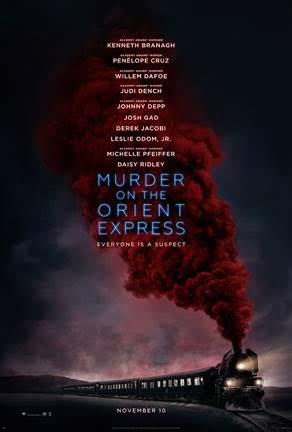
I haven’t read the novel by Agatha Christie nor seen the 1974 movie or any other adaptation. But you can bet that, because of Kenneth Branagh’s take on Murder on the Orient Express, I’ll be seeking out the book to read and the older movie to watch. The impression that this 2017 version left on me makes me excited to check out the other versions.
Branagh’s portrayal of detective Hercules Poirot and his work in the director’s chair are both highlights of the film. Branagh has always been an amazing actor, in my opinion, from his voice work as Miguel in The Road to El Dorado (an all-time favorite of mine) to his many Shakespeare roles. He embraces Poirot’s many quirks, pulls off a decent accent, kills it with his fluency in other languages, and sports an incredible mustache.
Meanwhile, Branagh’s camerawork is inventive and creates really awesome angles. For a movie that takes place almost entirely on a train, he films it in interesting ways. There were two particular pans, some long takes, and an overhead perspective that I loved. Thankfully, he doesn’t overdo any of these.
There’s a laundry list of big names in this movie, and all of the performances are solid. Like I said, Branagh has the best portrayal; however, I liked Michelle Pfeiffer in her role, and Josh Gad actually surprised me with his. There are a lot of characters, though, and all of them play into the murder mystery, so you definitely have to pay attention and pick up on some subtle hints. It’s pretty engaging stuff, for the most part.
It does get kind of hard to keep track of everything at some points. Branagh’s accent becomes muddled and unintelligible during certain scenes, so I felt like I missed key details. Other details have to be gleaned in a roundabout way, which I get is part of keeping the mystery brewing and solving the case in the end. But again, even when I was paying attention, details still slipped through the cracks. Luckily, of course, everything is laid bare in the end.
This may come as a shock, but I think the middle of the movie is the best part. Poirot is interviewing the passengers and doing the brunt of his detective work. The beginning is slow and steady, and the end is quite somber, despite the case being closed. I’m interested to find out how Christie’s novel ended and what changes, if any, Branagh made to his adaptation from the source material.
Regardless, I’d say that if you have just an inkling to see Murder on the Orient Express, then do it!
 etc.
etc. 